For jewellery brands, creator marketing stops being a fluffy awareness play the moment you attach revenue to it. That shift matters because the upside is real. In 2026, UK jewellery brands posting consistently on TikTok and Instagram achieved a 4.83% engagement rate, nearly triple the industry average, and that creator-led activity helped fuel £1.2 billion in jewellery-related GMV on TikTok Shop in 2025, a 94% year-over-year increase, according to this UK jewellery marketing statistics roundup.
Most brands still lose money in the same boring ways. They gift product with no code. They approve content with no usage rights. They pick creators because the feed looks pretty, not because the audience buys. Then they try to judge performance from views, saves and a vague sense that “people seemed to like it”.
That’s not a creator programme. That’s expensive guesswork.
Creator Marketing for Jewellery and Accessories Brands works when you treat it like a system. The aesthetic still matters. Jewellery is emotional, visual and highly context-driven. But performance comes from structure: the right creators, clear briefs, attribution from the first click, and a feedback loop that tells you what to scale and what to kill.
Foundations for Profitable Creator Campaigns
Most failed creator campaigns were already broken before outreach began. The brand didn’t define what counted as success, didn’t decide how tracking would work, and didn’t know whether it wanted content, sales, or both.
That’s why the pre-work matters more than the first DM. If you want a useful starting point for shaping the channel properly, this influencer marketing strategy from scratch guide is worth reviewing before you build a list or send a product.

Start with the commercial objective
“Awareness” is not a campaign goal. It’s a by-product.
For a jewellery or accessories brand, the core objective usually sits in one of these buckets:
Direct sales: You need creator content to convert into tracked orders through promo codes, TikTok Shop, affiliate links, or site traffic.
UGC production: You need usable creative for paid social, email, PDPs and organic channels.
Product launch support: You want concentrated visibility around a drop, collection, seasonal push or gifting moment.
Retail demand generation: You need local creators to push visits, appointments or event attendance.
Those goals can overlap, but one has to lead. If sales is the primary goal, the campaign setup must prioritise attribution and creator selection over aesthetics alone. If content production is the lead goal, usage rights and briefing become the priority.
Set guardrails before budget leaves the building
A lot of jewellery brands start with gifting because the product is visually appealing and easy to seed. That’s sensible, but only if you treat gifting as a test model, not a strategy on its own.
Use a simple planning sheet before any outreach:
Decision area | What to define upfront |
|---|---|
Offer | Hero product, collection, bundle, or price point to promote |
Outcome | Sales, content library growth, launch support, or creator whitelisting assets |
Tracking | Unique code, UTM, landing page, TikTok Shop linkage, or all of them |
Usage rights | Organic reposting only, paid usage, website use, email use |
Budget model | Gifting, flat fee, commission, or hybrid |
Review window | When you’ll decide who to retain, pause, or scale |
Without these guardrails, brands tend to overpay creators who make lovely content that doesn’t move product, or underpay creators whose videos should have been turned into paid assets immediately.
Practical rule: If a campaign can’t tell you which creator drove which sale, it isn’t ready to launch.
Define audience fit by aesthetic and behaviour
Jewellery buyers don’t purchase because a creator technically matches an age bracket. They buy because the creator makes the product feel like part of a life they want.
That means your targeting needs to answer questions like these:
Does the audience lean bridal, minimalist, luxury, vintage, bohemian, streetwear, or gifting-led?
Do they respond to “everyday luxury” styling, occasion dressing, or symbolic purchase stories?
Is the creator already wearing rings, earrings, chains or watches naturally in content?
Does the product look native in their world, or does it look dropped in by a brand team?
A fine jewellery piece worn in a slow, polished styling video performs differently from a stackable ring featured in a daily outfit clip. The item matters, but the use case matters more.
Build for repeatability, not one-off luck
The brands that get reliable returns don’t treat creator marketing like a monthly scramble. They create a repeatable operating model: shortlist, vet, brief, track, report, retain.
That’s especially important in jewellery because the category relies on trust and visual repetition. People often need to see a piece styled multiple times, in different contexts, before they decide it’s worth buying.
Use your first campaigns to answer four practical questions:
Which product category gets the strongest creator response
Which creator persona produces content that feels native
Which platform format generates buying intent
Which compensation model protects margin while keeping creators motivated
Once those answers are clear, the rest gets easier. Your outreach sharpens, your briefs improve, and your spend stops drifting into low-accountability collaborations.
Sourcing High-Impact Micro and Nano Creators
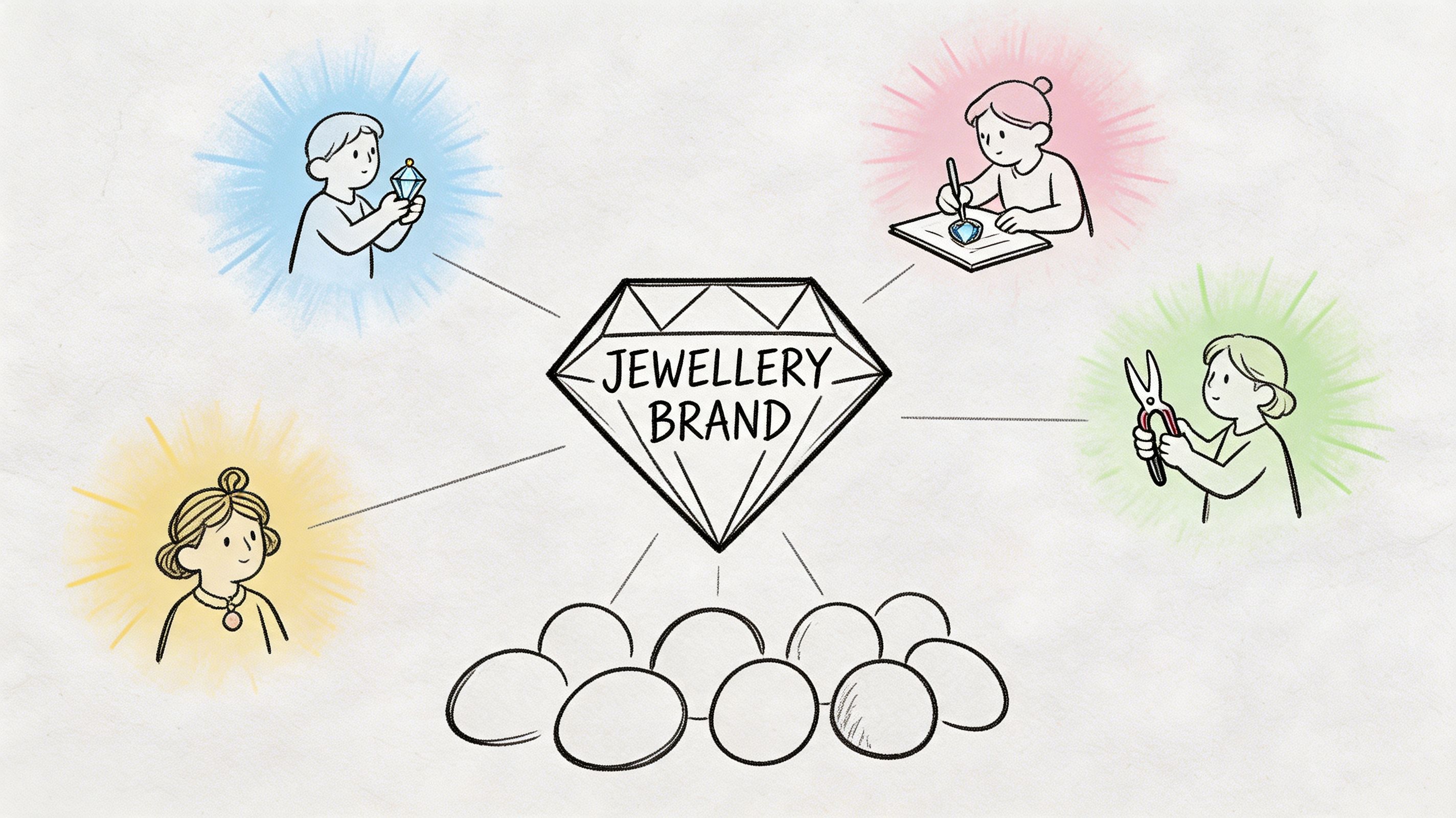
Smaller creators often drive stronger commercial outcomes for jewellery brands because their audience pays attention to details, asks product questions, and treats styling choices as recommendations rather than background content. If you want a useful companion read on why smaller creators often produce stronger commercial outcomes, this piece on why smaller creators drive bigger ROI lays out the logic well.
Stop searching by hashtag alone
Hashtag research is too shallow for this category. It surfaces creators who know how to label content, not necessarily creators who can sell a ring stack, explain plating concerns, or make a bracelet feel gift-worthy.
Use layered sourcing instead. Start with creators who already post outfit details, customers tagging your brand or similar brands, followers of adjacent labels in bridal, beauty, gifting, and fashion, and people publishing GRWM, styling, unboxing, and occasion-led content. Then go one step further and read comments. Jewellery buying intent often shows up there first.
Competitor analysis still matters. The expensive mistake is copying a rival’s creator list without checking whether those posts generated any real response. Look for creators whose audience asks where pieces are from, how they wear over time, how they layer, or whether they suit everyday use. That is a stronger signal than a polished feed.
For teams building a social commerce engine, this guide to TikTok Shop influencer marketing is useful for thinking through creator discovery with a stronger commerce lens.
Vet for buying influence, not surface polish
Jewellery is easy to misread. Many creators produce beautiful photography that fails to drive purchase intent because the content never answers buyer questions, shows scale clearly, or gives the audience a reason to click now.
I assess creators against four filters.
Audience behaviour
Check comments before follower count. Strong signals include questions about price, materials, tarnishing, clasp quality, stacking, gifting, and how the piece looks in daily wear.
Weak signals are generic praise, engagement spikes tied to giveaways, or comment sections filled with unrelated emojis and no product curiosity.
Aesthetic alignment
A creator does not need to match your campaign photography. They do need to make your jewellery look believable at your price point, in their own wardrobe, lighting, and daily context.
Use a short scorecard:
Filter | Strong sign | Weak sign |
|---|---|---|
Styling fit | Accessories already integrated into outfits | Product categories rarely featured |
Visual tone | Feed suits your brand’s finish and positioning | Content clashes with your desired price perception |
Storytelling | Explains why they wear pieces | Only posts posed visuals |
Commercial instinct | Natural CTA behaviour and audience response | Avoids product-led content entirely |
Product handling
Good jewellery creators know how to show detail. They film clasp shots, movement, layering, texture, and scale on the body. They understand that a necklace against one neckline can underperform against another, and that rings need motion to show proportion and shine.
That skill matters because shoppers are trying to resolve hesitation fast. If the content leaves basic questions unanswered, clicks drop and gifted product turns into untracked cost.
After you’ve done your initial screening, it helps to watch how experienced creators build product context in video.
Prioritise fit over fame
Smaller creators usually give jewellery brands more control and clearer learning. They are easier to test across product categories, easier to brief tightly, and often more believable when showing accessories as part of real life rather than a paid placement.
That does not mean every nano or micro creator is worth using. Some have taste but no selling instinct. Others can generate clicks but produce weak assets for paid reuse. The point is to source against the job required. Direct response, content production, seeding, whitelisting, or TikTok Shop all need a slightly different creator profile.
The right jewellery creator makes a product feel chosen, not sponsored.
Build a shortlist like a buyer, not a fan
Shortlisting should look closer to merchandising than moodboarding. Do not save creators because the feed looks nice. Save them because they can fill a commercial role and be tracked against it.
A strong shortlist usually includes a mix of:
Reliable converters who regularly move products in adjacent categories
Strong content producers whose videos can become paid assets
Niche community creators with local, bridal, sustainable, luxury or fashion-specific trust
Emerging nano creators who may be happy with gifting plus commission if the fit is excellent
I also recommend logging a few practical fields from the start: platform, audience cues, product fit, estimated content quality, likely compensation model, and the tracking method you plan to assign if they go live. That one habit prevents a common problem in jewellery creator programmes. Brands send product, collect content, and still cannot tie performance back to the individual creator with any confidence.
A good sourcing process should produce a shortlist that is ready for outreach and ready for attribution. If it only produces a folder of pretty profiles, it is not finished.
Crafting Compelling Briefs and Outreach
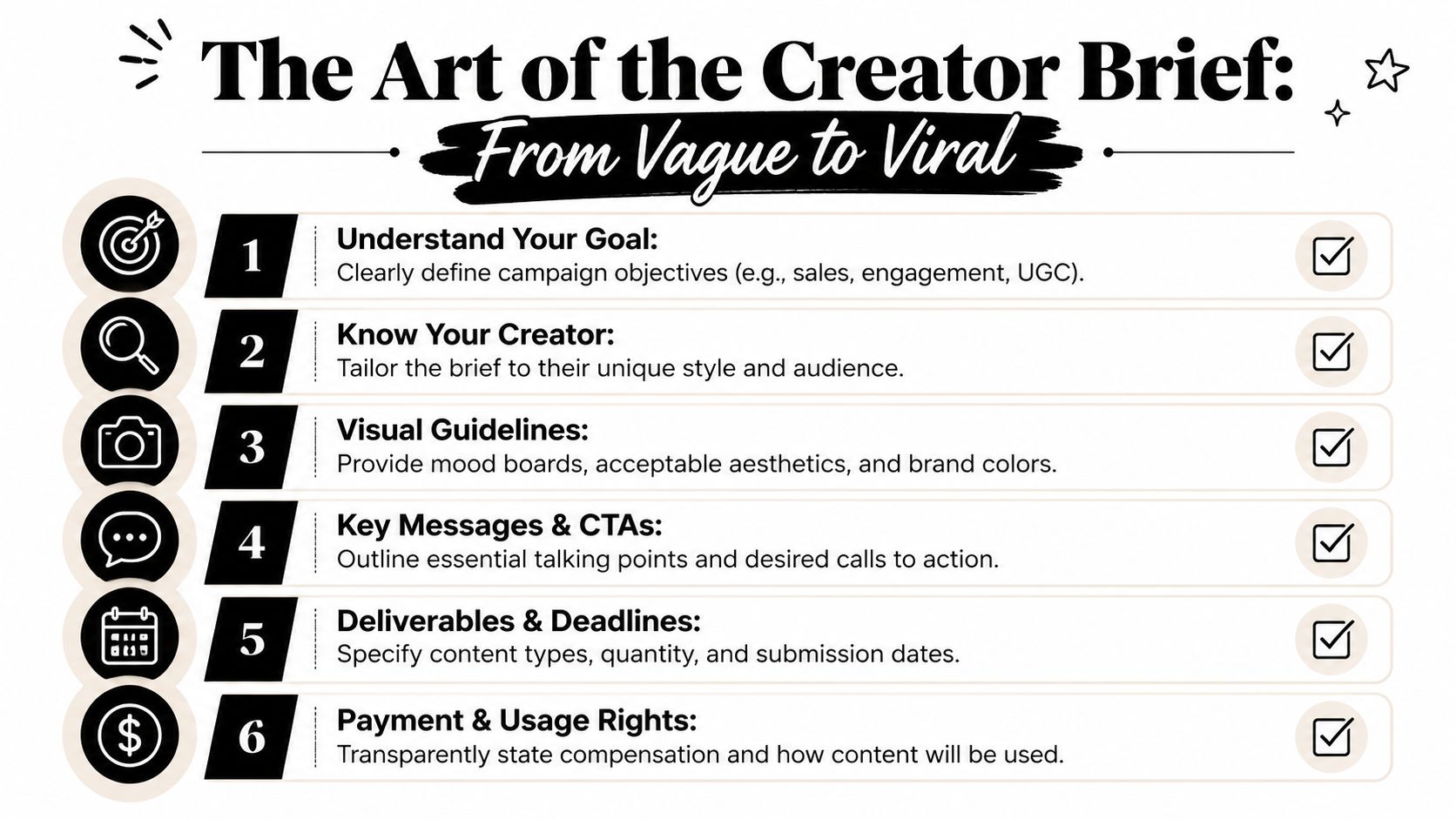
A large share of jewellery creator spend gets wasted before a post ever goes live. The problem usually sits in the brief. If the brief is vague, the content may still look attractive and still fail to sell, fail to qualify for paid reuse, and fail to support clean performance analysis later.
Bad briefs rely on brand language. They ask creators to be “premium”, “aspirational” and “on-brand”. Good briefs define the buying moment, the product function, the audience tension, and the action you want after the view.
What a weak brief looks like
A weak jewellery brief often says: show the product clearly, mention quality, tag the brand, and keep the content natural.
That gives the creator freedom, but not direction. Freedom without commercial context usually produces content that is pleasant, generic, and hard to use elsewhere.
The pattern is familiar:
a static unboxing on a table
one mirror shot
a caption with no buying trigger
no wear occasion
no product context
no hook in the first seconds
nothing the brand can confidently reuse in ads
The creator delivered what was asked. The brand still cannot get much value from it.
What a strong brief does instead
A strong brief tells the creator the product's function in a piece of lived-in content.
For a layered necklace set, do not ask for “an aesthetic reel”. Ask for a morning styling sequence that shows how the creator builds an everyday look, why the jewellery is their default finishing touch, and how it carries the outfit from coffee run to dinner.
For rings, ask for a stack-building format. For occasion jewellery, ask for a dress-up sequence with a clear event. For gifting, ask for a reaction, reveal, or short story about who the piece is for and why it was chosen.
Here’s the difference in practice:
Brief quality | Weak direction | Strong direction |
|---|---|---|
Concept | “Create a reel featuring the necklace” | “Film a GRWM where the necklace is the final styling choice that pulls the look together” |
Context | “Mention quality” | “Show why you reach for it during ordinary daily wear, not only dressy occasions” |
CTA | “Tag us in the post” | “Direct viewers to your code and explain who the piece suits” |
Reuse value | Unclear | Built for reposting, ads, PDPs and email |
The trade-off is simple. Tighter briefs improve consistency and reuse value, but briefs that are too prescriptive can flatten the creator’s voice. The best version gives a commercial frame without scripting every line.
The content formats that usually work
Jewellery tends to sell better in motion, in context, and on a person. Clean product shots still help, especially for detail and finish, but they rarely do the full job in creator campaigns.
Formats worth prioritising:
GRWM sequences: Strong for earrings, layered necklaces, ring stacks and bracelets because they place the product inside the styling decision.
Day-to-night styling: Useful when the commercial job is proving versatility and repeat wear.
Unboxing with first reaction: Effective for gifting, premium packaging and detail-led storytelling.
Close-up wear tests: Helpful when scale, shine, clasp design or comfort needs to be shown clearly.
Everyday luxury framing: Strong for brands that want jewellery to feel habitual rather than saved for occasions.
One practical rule helps here. If the concept does not create a reason for someone to imagine wearing the piece, it will usually underperform.
Field note: The more your brief maps to a real use case, the less likely you are to receive flat content that looks nice and converts poorly.
Outreach should sound researched, not templated
Generic outreach messages are easy to spot and often ignored by experienced creators. Messages like “Hi dear” or “we love your content” signal that the brand has not done the work.
A better first message proves fit in one or two lines. Reference a specific styling format they already post, mention why your product suits that format, then state the campaign angle, expected deliverables, timing, and compensation model. Keep it short. The goal is to start a commercial conversation, not send a brand manifesto.
If your team needs help tightening first messages, this resource on crafting personalized outreach messages is useful for improving response quality. For a creator-specific angle, this guide on how to write the perfect influencer outreach email is also practical.
Compensation should match the job
A common mistake in jewellery is paying for a post when the business needs three things at once: audience access, reusable content, and attributable sales. Those are different outputs. They should not all be priced as if they are the same job.
Use compensation based on the commercial role:
Gifting only works for early testing, nano creators, or highly aligned fans.
Flat fee makes sense when content quality and delivery reliability matter most.
Commission works when sales contribution is the priority.
Hybrid is often the best option because it pays for production effort and rewards performance.
If a creator is expected to produce polished vertical video, post it to their audience, grant usage rights, and support conversion, pay accordingly. Underpaying usually creates a more expensive problem later. The content arrives late, misses the brief, cannot be reused properly, or drives traffic you cannot turn into revenue.
Launching with Bulletproof Attribution
If you can’t trace creator activity to money, you do not have a performance channel. You have a content programme with optimism attached.
That distinction matters most in jewellery because brands often confuse visual success with commercial success. A ring stack video can attract saves, comments and reposts while generating almost no sales. A less glamorous GRWM clip can prove to be your best converter. Without attribution, both look “good”.
Why most brands get this wrong
The biggest failure point isn’t creator selection. It’s tracking discipline.
A 2025 UK benchmark report found that 68% of UK jewellery brands report under 20% accurate attribution for TikTok collaborations. The same benchmark says only 12% of brands use promo codes or pixel tracking effectively, which can lead to ROI miscalculations of up to 40%, according to this report on jewellery and accessories influencer campaign performance.
That’s the reason so many teams say creator marketing is hard to scale. They’re not scaling a system. They’re trying to scale uncertainty.
The minimum viable tracking stack
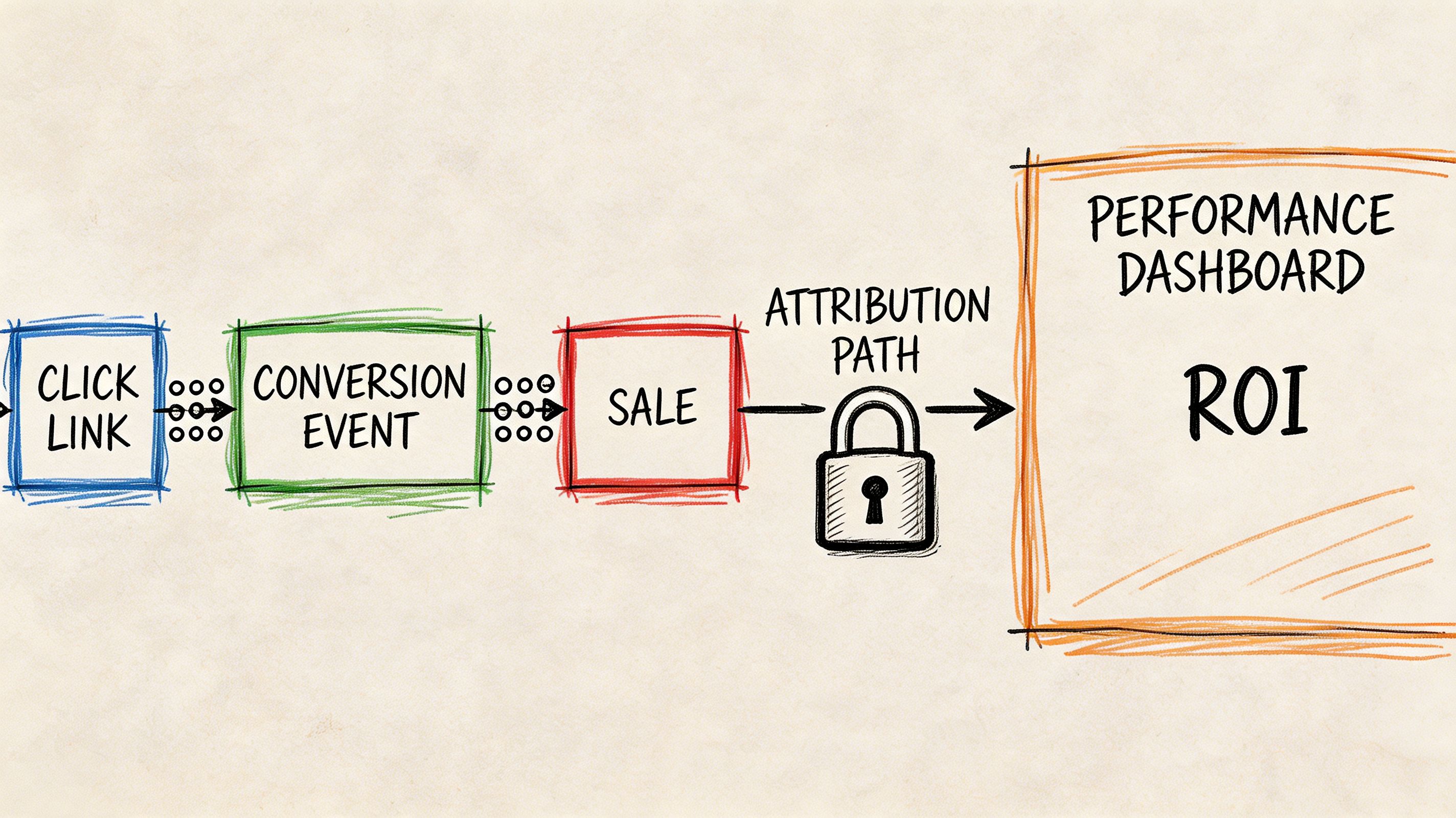
Every creator should have their own attribution package. Not shared. Not reused. Not added later if the content does well.
That package should include:
A unique promo code
This captures direct purchase intent and gives followers an easy reason to act.A unique UTM-tagged link
This tells you which creator generated the click, on which platform, for which campaign.A dedicated landing experience where relevant
For launches or curated edits, sending traffic to a generic homepage wastes intent.Clear creator naming conventions in your reporting
If the code says one thing and the UTM says another, your analysis gets messy fast.
This isn’t overengineering. It’s the minimum needed to identify what happened after a post went live.
TikTok needs a stricter approach
TikTok creates attribution problems because the path to purchase is often messy. Someone watches the video, doesn’t click, later searches your brand, then purchases on site or in TikTok Shop. If you rely on link clicks alone, you’ll undercount creator impact. If you rely on platform dashboards alone, you’ll over-credit surface activity.
That’s why jewellery brands need layered attribution on TikTok:
code redemption for direct conversion
UTM link tracking for measurable traffic
on-site analytics for assisted paths
creator-level reporting that compares content, clicks and orders side by side
If one of those pieces is missing, you’re guessing. If several are missing, your budget decisions are almost certainly wrong.
Track every creator as if they’ll become a long-term partner. Retroactive clean-up never works well.
Build attribution into the workflow, not the recap
The common bad habit is to launch first and organise reporting later. That guarantees errors.
A cleaner workflow looks like this:
Campaign stage | What must be locked before moving on |
|---|---|
Creator approved | Creator ID, payment model, usage rights |
Product sent | Correct SKU, campaign label, ship date |
Brief sent | CTA, code, link placement instructions |
Content approved | Correct tag, code mention, link plan |
Post live | Capture date, asset URL, story expiry handling |
Reporting live | Orders, revenue, clicks, redemptions, content saved for reuse |
That operational layer is what separates a manageable creator programme from spreadsheet chaos.
What to do with partial attribution
Not every sale will map perfectly. Jewellery purchases often involve hesitation, gifting decisions, and repeat viewing before checkout. But partial attribution isn’t a reason to stop tracking. It’s a reason to track multiple signals together.
I’d review creator performance in three buckets:
Direct response, including code redemptions and linked sales
Assist value, including traffic, saves, branded search spikes and site behaviour
Creative value, including whether the asset deserves reuse in ads, PDPs or email
That gives you a fairer view than forcing every creator into a last-click box.
The expensive mistake to avoid
Never gift product without assigning a code and link first. Otherwise, jewellery brands often burn budget without clear returns. Product goes out. Content arrives. The founder loves it. No one knows what it produced.
Then the team repeats the programme because it felt successful.
It may have been. But if you can’t prove it, you can’t improve it.
Attribution from day one is not an admin preference. It is the thing that turns Creator Marketing for Jewellery and Accessories Brands into a predictable revenue channel rather than a creative side project.
Measuring Success and Repurposing Content
Brands usually know when a creator post looked good. Far fewer can show what it sold, what it assisted, and which assets should keep working after the post goes live.
That gap is where margin disappears.
A useful review process separates commercial performance from creative usefulness. Jewellery brands need both. A creator can drive orders immediately, or produce content that improves paid social, PDP conversion, email click-through, and retargeting performance for weeks after the original post.
The metrics that deserve attention
Use a scorecard that answers buying questions, not just content questions.
For ecommerce jewellery brands, the most useful review usually includes:
Promo code redemptions to capture direct creator-driven purchases
Conversion rate to judge traffic quality
ROAS to measure return against total spend
Cost per qualified visit or cost per purchase to compare creators on efficiency
Content reuse potential to decide whether an asset belongs in ads, PDPs, email, or retargeting
Those metrics should be read together. A creator with low code usage may still be valuable if their content lifts product page performance or gives the paid team a strong acquisition asset. Another creator may convert well but produce content with no reuse value, which changes what you can afford to pay them next time.
Review creators by role, not by one metric
Last-click reporting misses too much in jewellery. People browse, compare, send links to partners, come back on payday, or wait for a gifting occasion.
Review performance in three buckets:
Creator | Content angle | Commercial signal | Next action |
|---|---|---|---|
Creator A | GRWM with layered necklace styling | Strong redemptions and reusable footage | Renew and test paid usage |
Creator B | Static unboxing | Weak sales and limited onsite value | Pause or keep for low-cost seeding only |
Creator C | Everyday wear diary | Assisted traffic, strong saves, solid session quality | Re-brief with a clearer CTA |
This keeps the assessment honest. It also stops teams from dropping a creator who was weak on direct conversion but strong on assisted demand or asset quality.
Repurpose the winners quickly
One expensive pattern shows up often in ecommerce teams. The creator manager signs off strong UGC, then the asset sits in a folder while the paid team briefs a new shoot for the same product story.
Fix that with a simple handoff process.
When an asset proves it can hold attention or help conversion, move it into:
paid social ads for acquisition and retargeting tests
product detail pages to show scale, movement, clasp detail, and styling
email campaigns for launch support, gifting pushes, and social proof
organic social to keep the brand feed close to real customer behaviour
landing pages for featured collections or bestselling pieces
Speed matters here. The best creator assets often perform because they feel current, specific, and believable. Waiting six weeks to reuse them lowers their value.
Some of the best-performing jewellery creative looks like a customer solving another customer’s hesitation.
Build a reporting habit people will use
Skip the bloated slide deck. Use a report the ecommerce lead, performance lead, and creator manager can all act on in one meeting.
At minimum, review:
top revenue-driving creators
top converting content angles
creators with the best content-to-cost ratio
assets worth licensing for broader paid or onsite use
underperformers who need a tighter brief, a different product, or a pause
If you want a broader framework for tying content to business outcomes, Netco Design's content ROI advice is a useful reminder that content should be judged by outcomes, not output.
The point of reporting is simple. Keep funding what drives revenue. Keep reusing what shortens the path to purchase. Cut anything that only feels successful.
Scaling Your Programme for Long-Term Growth
A good creator campaign proves a concept. A scaled programme creates an advantage competitors feel over time.
The shift happens when you stop treating creators as one-off content suppliers and start building a structured bench. In jewellery, repeat exposure matters. The same creator wearing the same pieces across ordinary moments builds familiarity in a way one sponsored post rarely can.
Turn top performers into repeat partners
One-off collaborations are fine for testing. They’re weak for building durable demand.
Creators who have already shown product fit, audience trust and commercial value should move into a repeatable cadence. That usually means clearer scheduling, better product visibility, stronger story continuity and tighter feedback loops between the brand and creator.
Longer-term partnerships are also where creators get better at selling your category. They learn how your pieces sit, which details matter, what follower objections come up, and which framing gets the strongest response.
Scale by segment, not by dumping in volume
A lot of brands try to scale by adding more creators every month. That creates management overhead and often lowers quality.
A better model is to scale by cohort:
evergreen converters who can sell core pieces repeatedly
launch creators who are strong around new collections
content-first partners who supply reusable UGC
local creators who help support in-store events, pop-ups or regional momentum
That segmentation also helps if you sell across multiple aesthetics or price positions. The creator who can move bridal pieces may not be your best fit for everyday stacking jewellery.
Local scaling matters more than most brands realise
For brands with stores, stockists, concessions or city-specific activations, local creator density is often more useful than broad reach. A smaller creator in London, Manchester or Birmingham who regularly influences local shoppers can be more commercially relevant than a much larger creator with diffuse national attention.
This is especially true for:
in-store launch nights
piercing events
styling appointments
market stalls and pop-ups
regional gifting pushes
The structure should still stay disciplined: same briefing logic, same tracking setup, same review standard.
Keep compliance boring and consistent
As the programme grows, disclosure and usage rights can’t stay informal. Every creator should know how to label sponsored content properly, and every asset should have clear permission terms attached to it.
That protects the brand, but it also protects the relationship. Creators work better when expectations are documented, not implied.
The brands that win with Creator Marketing for Jewellery and Accessories Brands don’t chase endless novelty. They build a machine that reliably finds the right people, gives them the right brief, tracks the right outcomes, and keeps the right partners.
Sup helps ecommerce brands turn creator marketing into a tracked, repeatable growth channel. If you want a simpler way to source matched micro and nano creators, launch campaigns with unique codes and UTM links, manage outreach without spreadsheets, and see clicks, conversions and revenue in one place, explore Sup.

Matt Greenwell
Share